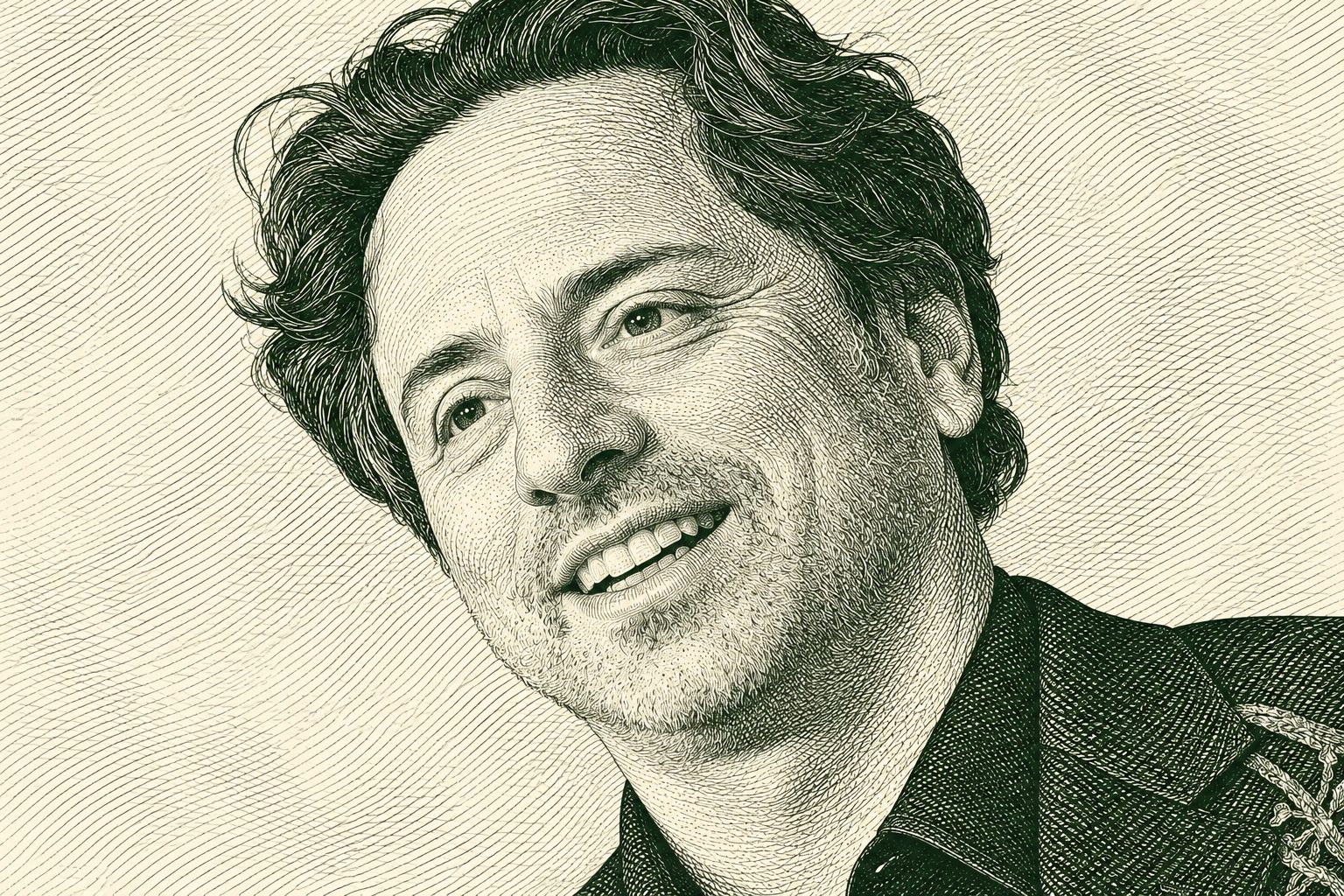
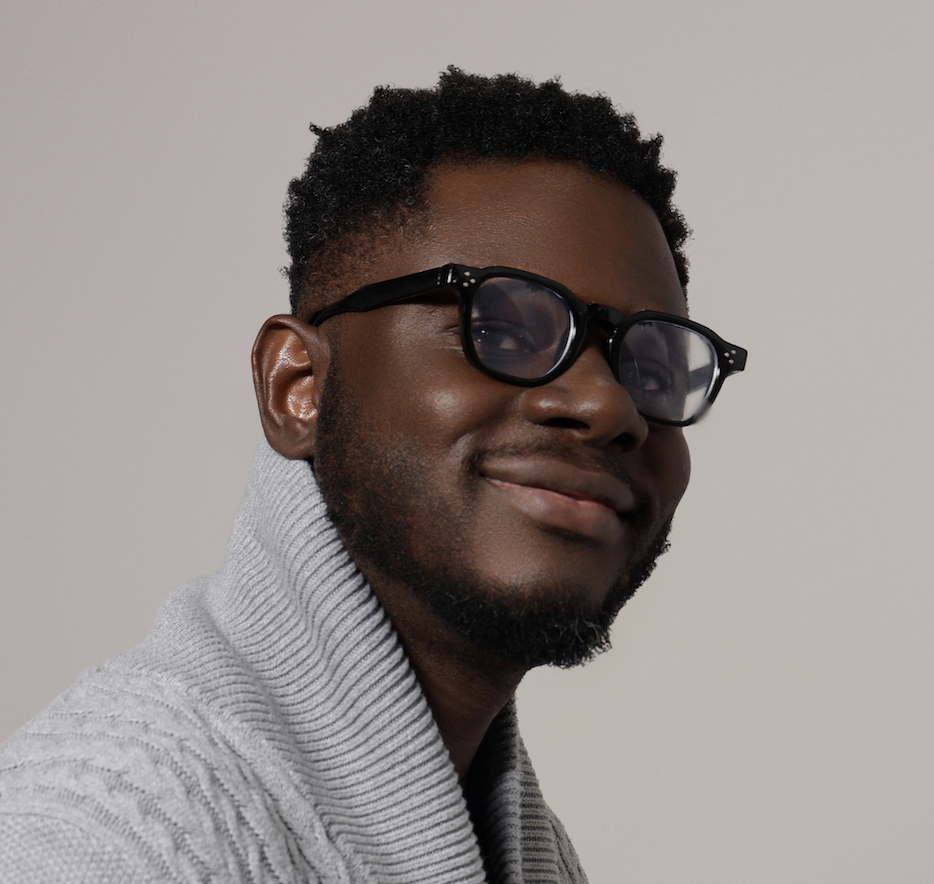
In September 1978, a Soviet mathematician named Michael Brin told the authorities he wanted to leave the country with his family.
He was promptly fired. His wife Eugenia had to leave her job too. Then they waited, with no income and no guarantee, for the government to decide whether they could go.
Their son was five. His name was Sergey.
That boy grew up to co-found Google and help build the search engine billions of people use every day. Today he is back at the company, writing its next chapter in AI. He is one of the richest people on earth.
And here is the part most people don't know: he grew up right here in Prince George's County, Maryland.
This is Part 3 of Immigration Stories, where we look at one immigrant who built something extraordinary in America and ask what the founder reading this can actually take from their path. Part 1 was Jensen Huang. Part 2 was Tope Awotona. This one is a DMV story.
Leaving cost them everything
Sergey Brin was born in Moscow in August 1973 into a Jewish family. Both his parents were graduates of Moscow State University. His father was a mathematician. His mother was a scientist.
In the Soviet Union of the 1970s, being Jewish put a ceiling over your head. Doors closed quietly. Michael Brin has said he was steered away from the career he wanted because he was Jewish, and the family decided their son would not grow up under the same ceiling.
So they applied for exit visas in 1978. The cost was immediate: both parents lost their jobs. They waited about nine months. In May 1979 the visas came through.
They went to Vienna first, then Paris. In Vienna they were met by HIAS, the Hebrew Immigrant Aid Society, which bought their tickets and connected them with Jewish organizations in Maryland. On October 25, 1979, the Brins landed in the United States.
Sergey was six.
Adelphi, Greenbelt, College Park
After a short stay with a friend on Long Island, the family moved to Maryland. A fellow Soviet émigré mathematician, Anatole Katok, who had arrived a year earlier, helped Michael land a teaching job at the University of Maryland. Eugenia went on to work as a researcher at NASA's Goddard Space Flight Center.
Sergey started at Paint Branch Montessori School in Adelphi. He struggled to adjust at first. New country, new language, new everything.
But his parents kept feeding his mind. His father gave him a Commodore 64 when he was nine, and he started programming. He went to Eleanor Roosevelt High School in Greenbelt, raced through it in three years, and enrolled at the University of Maryland in 1990.
He graduated from UMD in 1993 with a degree in computer science and mathematics, with honors. He was 19.
If you live in the DMV, you have driven past these places. Adelphi. Greenbelt. College Park. A refugee kid went to school on those roads and came out ready to change the internet.
Rejected, then redirected
Sergey won a National Science Foundation fellowship for graduate school. MIT rejected him. He went to Stanford instead.
Sit with that for a second. One of the most important computer scientists of his generation got a no from MIT. It did not matter. He took the yes he had and went west.
The tour guide
In 1995, Stanford assigned Sergey to show a prospective PhD student around campus. The student was Larry Page.
By Google's own telling, the two of them were not especially fond of each other at first. They argued about everything. Then they started working together.
In 1996 they built a research search engine called BackRub, which ranked web pages by the links pointing to them. It ate so much of Stanford's bandwidth that the network admins complained. By 1997 they had renamed it Google.
In August 1998, Sun Microsystems co-founder Andy Bechtolsheim watched a quick demo on a professor's porch and wrote them a $100,000 check made out to "Google Inc." The company did not exist yet. So they incorporated it, and moved into a garage in Menlo Park rented from their friend Susan Wojcicki.
You know the rest. Google went public in 2004. It became Alphabet in 2015. Sergey stepped back from day-to-day work in 2019.
He came back
Most billionaires who step back stay back. Sergey didn't.
In 2023, as the AI race heated up, he returned to Google to work on Gemini, the company's flagship AI model. Not as CEO. As a technical contributor. By 2025 he said he was at the office "pretty much every day."
In January 2026, Alphabet passed $4 trillion in market value, helped by the Gemini boom. Forbes put Sergey's net worth above $255 billion, making him the third richest person in the world.
He never forgot the door
In October 2009, on the 30th anniversary of his family's arrival, Sergey gave $1 million to HIAS, the organization that met his family in Vienna. He said he would never have had the opportunities he found here in the Soviet Union, or even in Russia today.
In January 2017, when an executive order suddenly barred travelers from seven countries, Sergey showed up at San Francisco International Airport to join the protest. He came in a personal capacity and said almost nothing to the press. Asked why he was there, he told Forbes: "I'm here because I'm a refugee."
Two days later, speaking to Google employees, he said he came to the U.S. at six from the Soviet Union, then America's greatest enemy, and that he would not have the life he has if America had not been brave and welcoming.
What you can take from Sergey's path
First, the honest part. Sergey came to America at six, with his family, as a refugee from the Soviet Union, and he has been a U.S. citizen for most of his life. His door does not look like yours.
If you are a founder, researcher or operator today, your door probably looks like an O-1A, an EB-1A or an EB-2 NIW. Different paperwork. Same principle. Here is what I take from his story:
1. Leaving always costs something. The Brins lost both jobs the day they applied to leave. Every immigrant pays a price to move. Count it honestly, then pay it with your eyes open.
2. Your network is your landing gear. HIAS bought the tickets. Anatole Katok, a fellow immigrant who had arrived a year earlier, helped Michael get the job at Maryland. Immigrants rarely make it alone. Find the people who went before you, and when it's your turn, be that person for someone else.
3. A no is not the end of the road. MIT said no. Stanford said yes. Your first visa denial, your first rejected application, your first RFE is information, not a verdict.
4. Research can become a company. Google started as a PhD research project. If you are a researcher, your work may be more than a paper. For many researchers, that same work is the foundation of an EB-2 NIW or EB-1A case. Document it like it matters, because it does.
5. Pick partners who push back. Sergey and Larry argued from day one. The best co-founders sharpen each other.
6. Remember who held the door. Thirty years later, Sergey went back and thanked HIAS. Then he stood in an airport for people he had never met. Success that forgets where it came from is just money.
7. Immigration is a wealth-building strategy. A family of Soviet refugees settled in Prince George's County. Their son helped build a company now worth trillions of dollars that employs well over a hundred thousand people. That is what America gets when it keeps the door open.
We say it back home: a moving man will meet his luck. The Brins moved when moving cost them everything. Their son met his luck on a campus tour.
Keep moving.
Next in Immigration Stories: tell me who you want me to write about.
Agora is an immigration technology firm, not a law firm, and is not affiliated with USCIS or the Department of State. Legal services are provided by independent licensed attorneys in the Agora network.
Sources
- Sergey Brin, Wikipedia
- Sergey Brin biography, EBSCO Research Starters
- The Story of Sergey Brin, Moment Magazine (via Patheos)
- Our story, Google
- Google's Brin gives $1 million to HIAS, JTA
- Sergey Brin joins anti-travel ban protests at SFO, CNBC
- Google's co-founder criticizes refugee ban in passionate speech, Fortune
- Sergey Brin becomes world's third richest after Alphabet hits $4 trillion, Forbes Australia
- Google's co-founder in office "pretty much every day" to work on AI, eWeek